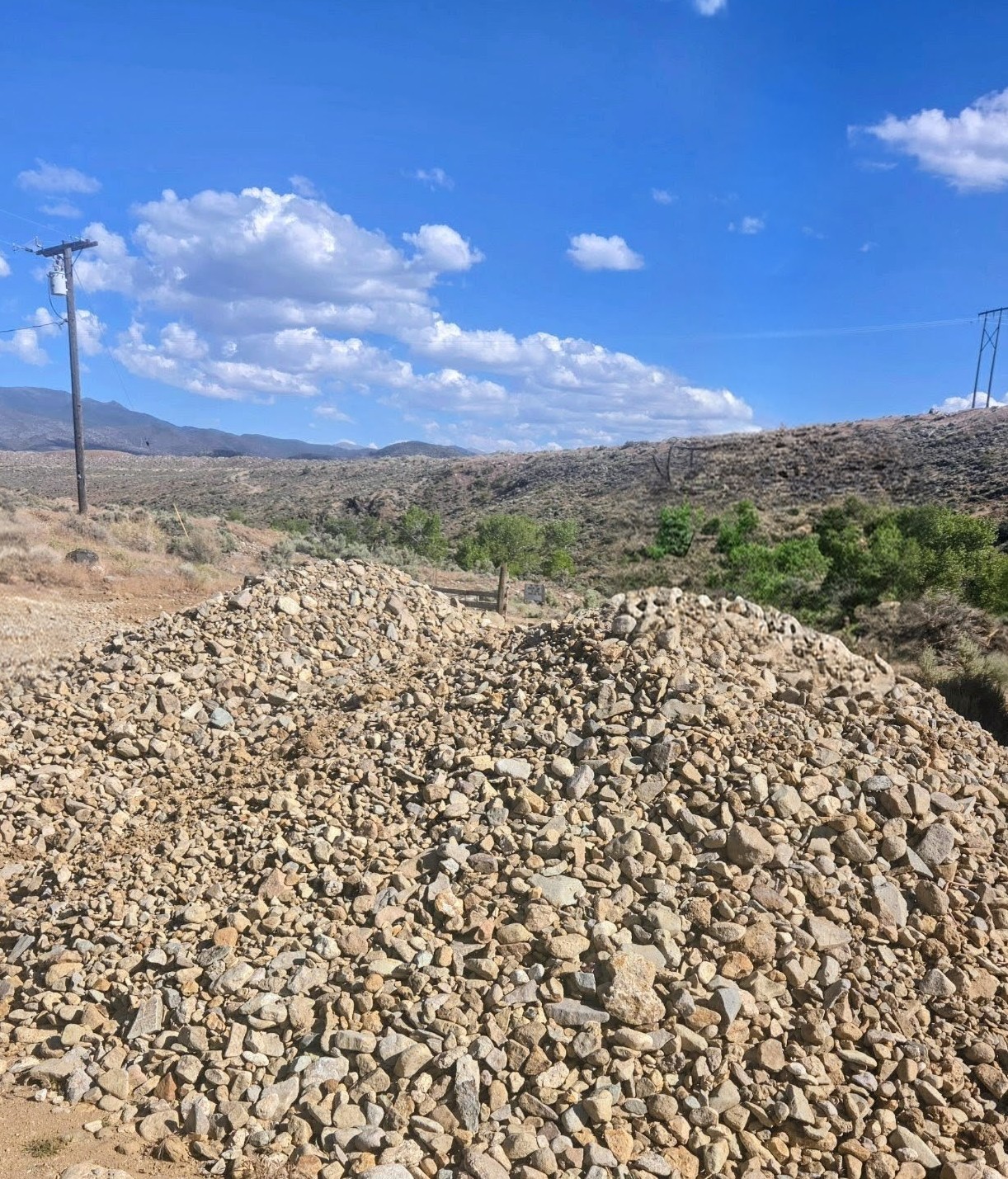
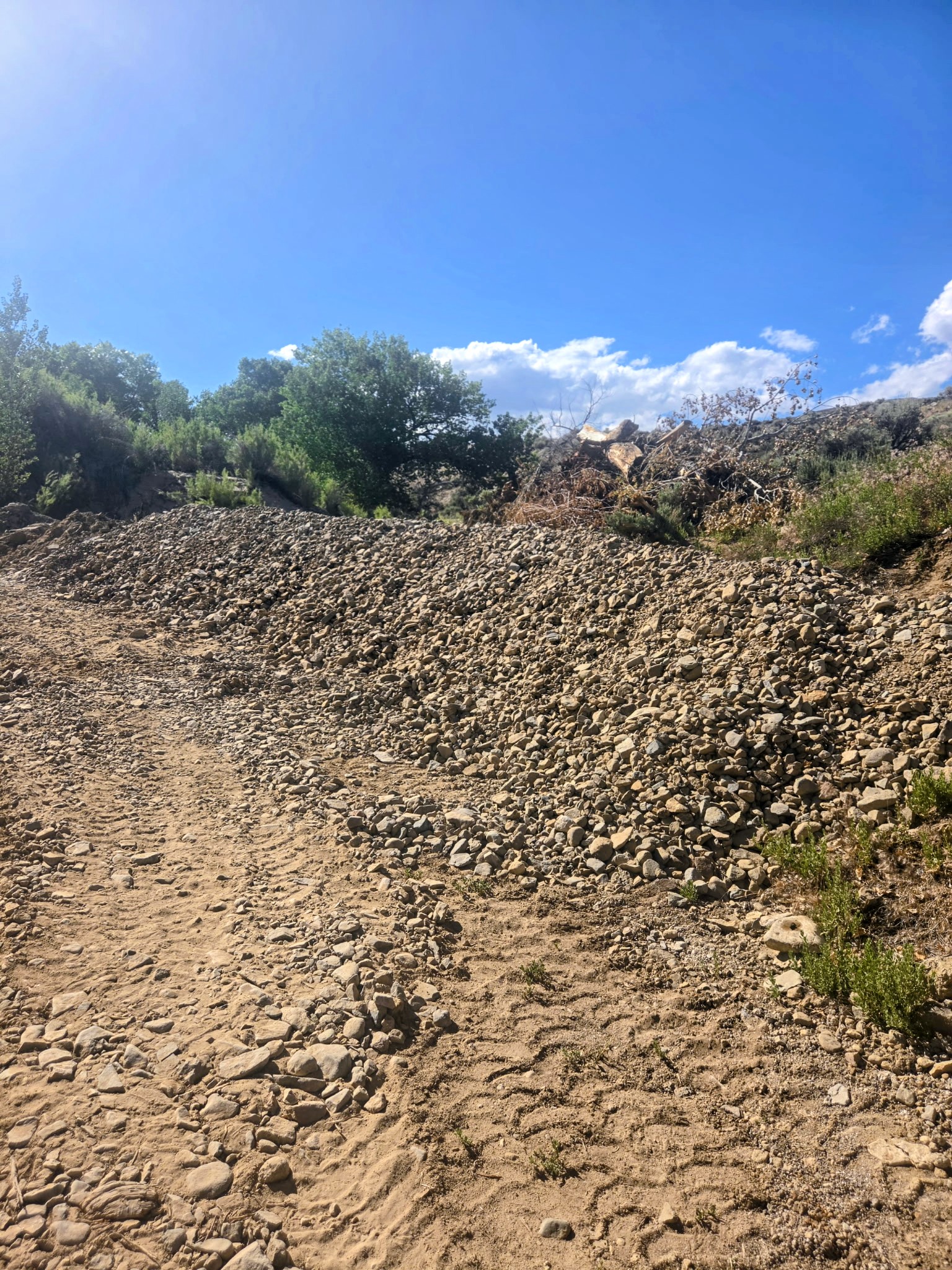
Gold Creek Tailings — reclamation pit face in Gold Canyon, Dayton Nevada
Reclamation under NDEP oversight

Former Newmont tailings. EPA-aligned reuse. Local delivery.

Gold Creek is not a quarry. It is a regulated reclamation operation on the Comstock workings — turning a century of mining waste into a clean Northern Nevada aggregate supply.

The Origin

A Former Newmont Operation, Reclaimed

Gold Canyon’s tailings are the by-product of milling operations that ran on the Comstock over the past century. The deposit sits at surface — no drilling, no blasting, no new cuts.

Gold Canyon — reclamation site in Dayton, Nevada

Milling operations run earlier in the 20th century left behind vast quantities of processed material — the rocky fraction that remained after ore was concentrated and metals extracted. That material is Gold Creek’s raw feed.

The deposit is alluvial aggregate: a naturally graded mix of cobbles, gravel, sand, and fines. There is no overburden, no topsoil, and no clay-bearing waste rock blended in. What came out of the mill is what we reclaim — a washed river-rock equivalent, processed and ready to load.

Because the tailings already sit at surface, opening a pit face requires no quarrying. The deposit is accessed where it lies. That is the structural difference between a quarry and a reclamation operation, and it is the difference regulators care about.
The Process

From Tailings Pile to Truck

Every load that leaves the pit goes through the same four-step reclamation flow. The work happens on-site at Gold Canyon — no off-site hauling, no third-party processing.

Step 01

Survey & Test

The working face is mapped and sampled before any material moves. Gradation, fines content, and consistency are verified against the spec the load is being produced for.

Step 02

Screen & Wash

Material is fed through a grizzly screen and then through the wash plant. Coarse aggregate is sized; fines and clay are reduced. Wash-water is handled on-site in a closed loop, not released untreated.

Step 03

Classify & Stockpile

Clean, size-separated material is stockpiled by grade. Each pile is kept clean and accessible. Loads are pulled to spec at order time — no blending at the truck.

Step 04

Load, Weigh, Dispatch

End-dump and belly-dump trucks, loaded and weighed on the on-site scale. Tickets issued at the quarry — FOB the pit — with documented chain of custody for spec-sensitive projects.

Compliance

Regulated as Reclamation, Not Extraction

Gold Creek operates under the oversight of the Nevada Division of Environmental Protection, with coordination through Lyon County. The permit posture is reuse authorization — not a new mining permit — and that distinction shapes everything we do.

NDEP Reuse Oversight

The operation is regulated under the Nevada Division of Environmental Protection as a material-reuse authorization, not under a standard open-pit mining permit. Permitting records and inspection reports are filed with the state, and the operation is reviewed against the post-reclamation use case — not extraction volume.

Water Discharge

Wash-water is routed through on-site settling prior to any release, and material handling is done in a closed loop wherever the site geometry allows. Process water is not discharged untreated. The compliance posture is conservative: where state standards leave room for interpretation, we operate below the line.

Lyon County Jurisdiction

The site sits within Lyon County, Nevada. Operations are coordinated with the county planning office and the State of Nevada. Local jurisdiction, state oversight, and federal alignment — the standard three-tier compliance stack for Northern Nevada aggregate operations.

Documented Chain of Custody

Every load is weighed on the on-site scale, with a ticket issued at the pit. Gradation logs, source-of-material records, and processing notes are kept on file. For spec-sensitive projects — municipal, federal, or environmentally regulated — that documentation is available on request.

Why Reclaimed Wins

The Environmental Case, in Three Claims

Reclamation is not the same thing as a green badge. It changes the math on three hard numbers — waste stream, haul distance, and ground disturbance — and on every one of them, this material wins against virgin quarry rock.

Diverted From Landfill

The material was otherwise destined for permanent disposal as mining waste. Reuse pulls it out of the waste stream and puts it into the construction supply chain. One ton of tailings reclaimed is one ton that does not need to be buried.

Lower Quarry Haul Miles

The source is Lyon County. The active Northern Nevada construction corridor — USA Parkway, Dayton, Carson City, Reno-Sparks — sits inside a short-haul radius. Compare that to virgin aggregate trucked in from outside the region, and the emissions delta is structural, not symbolic.

No New Ground Disturbance

The tailings surface is already there. Reclamation works the existing pile rather than cutting a new face. Surrounding acreage is undisturbed. Habitat fragmentation, dust from a fresh pit, and the permitting footprint of a new quarry are all avoided.

Get on the schedule.

Send a project inquiry and we’ll confirm FOB-the-pit availability and pricing within one business day. Spec-sensitive bids welcome — full chain-of-custody documentation on request.